How to Spot Overlooked Customer Groups in a Saturated Market
Why Underserved Segments Matter
In any crowded market, most competitors chase the same obvious customers. They target the broadest need, compete on price or features, and end up fighting for shrinking margins. The businesses that grow consistently are the ones that find the pockets of demand everyone else ignores. Identifying underserved customer segments is not about guessing. It is a systematic process that starts with data and ends with a clear decision on where to invest your resources next.
Market opportunity analysis gives you a framework for that process. It helps you separate real demand from noise and shows you where competitor activity is weak relative to customer intent. When you apply this method honestly, you often discover groups that are actively searching for a solution but finding nothing that fits well.
What to Look For First: Demand Without Supply
The simplest signal of an underserved segment is a gap between what people search for and what businesses offer. Start with search data and customer forums. Look for questions that keep coming up without a clear answer from existing products. For example, if you run a local service business, you might notice that people in certain suburbs or with specific schedules keep asking for availability that no competitor provides. That pattern is a lead.
Another indicator is frustration in reviews. When customers consistently complain about the same missing feature, pricing model, or service style, that complaint defines a segment that wants a different approach. Do not dismiss those voices as outliers. They are describing an underserved group.
Step 1: Map the Obvious Segments First
Before you can find what is missing, you need a clear picture of what is already served. List every major customer group that your direct competitors target. Group them by common traits: geography, budget size, use case, purchase frequency, or technical sophistication. This is your baseline map. Most competitors will cluster around two or three of these groups, usually the largest or most visible ones.
As you build this map, note where the overlap is heaviest. Those are the red ocean areas where differentiation is hardest. The areas with few or no competitors are where your search for underserved segments begins.
Step 2: Layer on Customer Intent Signals
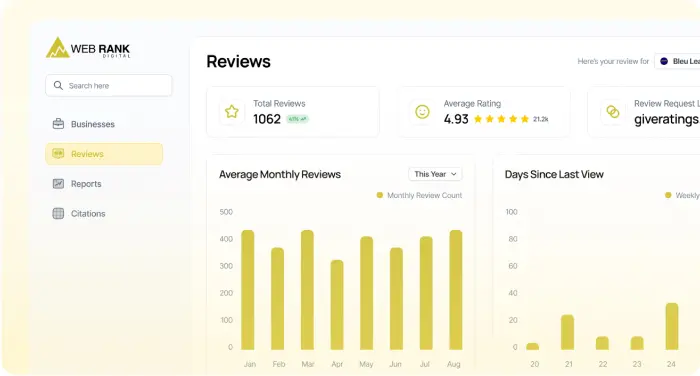
Customer intent is not the same as a demographic profile. Two people with the same age and income can want completely different things from a product. Intent signals come from behavior: what terms they use in search, what content they consume before buying, how long they stay on a page, and what questions they ask in support channels.
Tools that track these signals can show you micro-segments you might never think of. For instance, a group that searches for a specific pain point but never follows up with brand names is probably underserved by current options. Their intent is clear, but their conversion path is blocked by a lack of fit.
Pay attention to seasonal or event-driven intent as well. Parents searching for after-school programs in a specific district, retirees looking for part-time work in a particular industry, or small businesses needing compliance help during tax season all represent time-bound segments that competitors often overlook because they focus on steady-state demand.
Step 3: Score Each Segment for Viability
Not every gap is a good opportunity. Some exist because the segment is too small, too hard to reach, or not willing to pay enough to support a business. This is where opportunity scoring comes in. For each potential segment you identify, evaluate it on three criteria: size, access, and willingness to pay.
Size does not have to mean millions of people. A niche segment of a few hundred businesses or a few thousand households can be very profitable if the need is urgent and the solution is high-value. Access means you can reach that group through channels you already use or can afford. Willingness to pay is the hardest to assess without data, but you can infer it from the prices of existing alternatives and the intensity of complaints about those options.
Score each segment honestly. A low score on any one criterion is usually a reason to move on. A segment that scores well on all three is worth further investigation.
Step 4: Validate With Real Behaviour
Assumptions are cheap. Real behaviour is expensive to observe but far more reliable. Before you commit resources to a segment, test whether the people in it actually do what you expect. Run a small campaign aimed at that group and measure the response. Talk to a handful of them in interviews or surveys. The goal is not to prove your hypothesis right; it is to find out where you are wrong.
One common mistake is to confuse expressed interest with committed action. People will say they want a feature or a service when asked, but many will not pay for it when it becomes available. Behavioural validation separates genuine demand from polite feedback.
Watch for patterns in competitor moves too. If a big competitor enters your target segment, your window of opportunity may close. If they ignore it despite clear signals, you may have found a space they cannot serve well for structural reasons, such as their business model or cost structure.
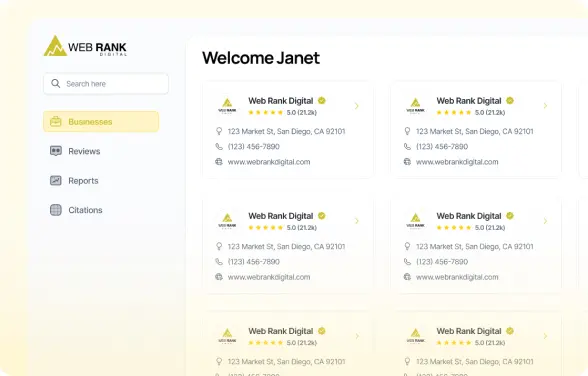
A platform like webrankdigital.com can help you track competitor activity and customer intent across different locations and segments. By combining that data with your own observations, you build a picture that is grounded in real market conditions rather than guesswork.
Step 5: Decide on Your Entry Point
Once you have validated a segment, you need a clear entry strategy. This is where you choose one specific angle to serve that group. Do not try to be everything to everyone in the segment. Pick the one pain point that matters most to them and design your offer around it. If the segment values convenience over price, build for convenience. If they want deep expertise, lead with authority.
The entry point also defines how you talk about your solution. Your messaging should speak directly to the specific gap you identified, not to the broad market. When people in the segment hear your message, they should recognise their own situation immediately. That recognition is what drives conversion.
Consider your distribution as part of the entry decision. If the segment is concentrated on a particular platform or in a specific location, focus your efforts there. Spreading thin across channels dilutes your impact and wastes time you could spend building a strong presence where it matters.
Step 6: Monitor and Adjust
Underserved segments do not stay underserved forever. As you prove the opportunity exists, competitors will eventually notice. Your advantage comes from moving first and learning faster. Set up simple tracking for the signals you used in step two. Watch for changes in search volume, competitor content, and customer sentiment within your segment.
If your segment starts to attract more competitors, you may need to refine your positioning or find a deeper niche within it. Alternatively, you may decide to exit and apply your process to a new segment. The skill is in the method, not in any single segment.
Market opportunity analysis is not a one-time project. It is a cycle you repeat as the market shifts. Each pass gives you a sharper sense of where demand is growing and where supply is thin. Over time, that knowledge becomes a strategic asset that is hard for competitors to copy.
What to Watch Out For
Several traps can mislead you during this process. The first is confirmation bias: seeing only the data that supports your existing idea of a good segment. Always spend as much energy trying to disprove your hypothesis as you spend building it. The second is analysis paralysis. You can study a segment forever without ever acting. Set a deadline for each evaluation phase and make a decision by that date, even if the data is imperfect.
The third trap is ignoring the cost of serving a segment. A group that looks ideal on paper may require expensive customisation, long sales cycles, or support that your current operation cannot handle. Factor in the operational reality before you commit.
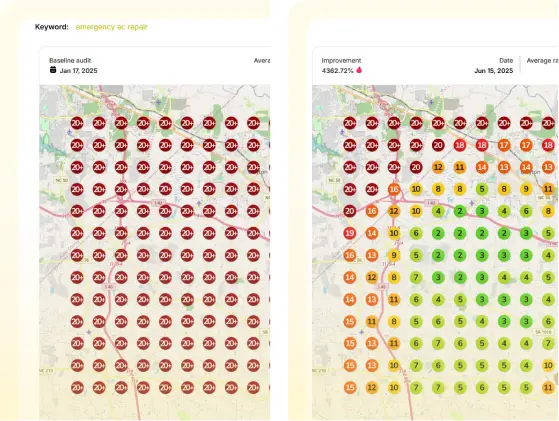
Finally, do not confuse a niche segment with a low-growth one. Some niches grow slowly but steadily, offering reliable returns over years. Others are fads. Use the same criteria you applied in the scoring step to distinguish between them. A segment with consistent demand and limited competitor activity is usually a better bet than one that is suddenly popular but built on hype.
Building a Repeatable Approach
The real value of identifying underserved segments is not in any single discovery. It is in building a repeatable process that you can apply to any market you enter. Once you have a system for mapping demand, scoring opportunities, and validating with real behaviour, you reduce the guesswork in every new initiative. Your growth priorities become clearer because you are acting on evidence, not instinct.
Whether you are expanding into a new city, launching a product line, or refining your current offer, the same steps apply. Start with what competitors serve, layer on customer intent, score for viability, validate with behaviour, choose your entry point, and monitor the results. Each cycle makes you better at spotting the gaps that others miss.
For businesses that operate across multiple locations, tools like webrankdigital.com can centralise the data you need for this analysis, from competitor activity to local search trends. But the method itself does not require expensive software. It requires curiosity, discipline, and a willingness to look where no one else is looking.